Digital Minimalism: Closing the Tabs in Our Minds
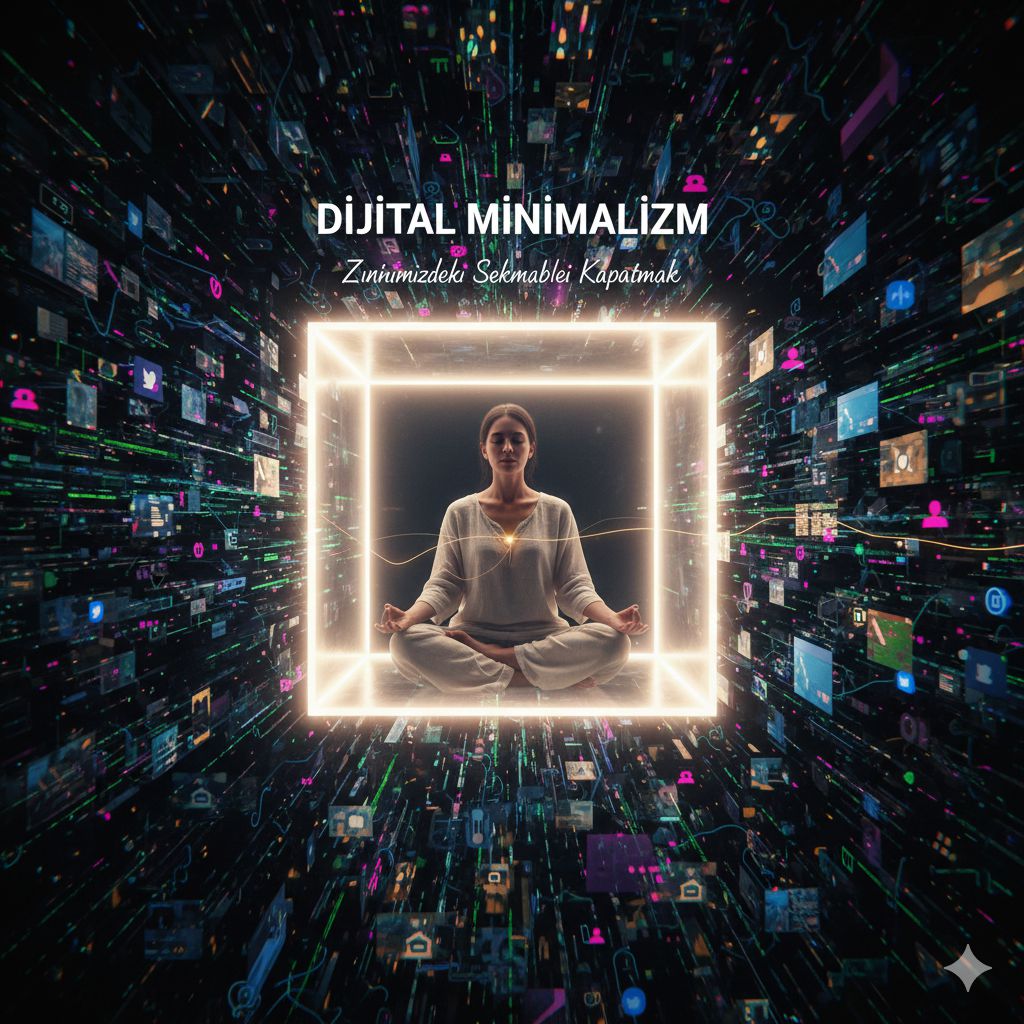
When we wake up in the morning, the first thing we reach for is that small rectangle that fits into the palm of our hand. A notification sound, the first click of the day—and before we are even fully awake, our minds are thrown into a bombardment of information. Emails, social media feeds, headlines, and messages... It feels as if the entire world is speaking to us through that screen and expects us to be aware of everything at all times. Modern individuals are struggling with an invisible fatigue caused by the pressure to “know everything.” The tabs in our minds, much like those in our browsers, remain constantly open, constantly refreshed, creating a continuous flow of information overload. But is there no way out of this chaos? Is it possible to regain our inner silence, our ability to focus, and our sense of calm? This is exactly where the concept of digital minimalism emerges—as a quiet whisper that helps silence the noise within our minds.
This endless flow of information brought by the digital age also carries a range of modern challenges. One of the most significant is the urge known as FOMO—the fear of missing out. The constant need to stay “online” and keep up with every new post pins us to our screens, consuming our most valuable resources: our attention and our time. We find ourselves swimming in an ocean of information pollution; however, this ocean is filled with unnecessary, misleading, or meaningless data. As our minds spend energy processing this clutter, they gradually lose the ability to distinguish what truly matters. The illusion of perfect lives imposed by social media leads us to perceive our own lives as insufficient, trapping us in a cycle of comparison. When combined with the myth of multitasking—something our brains are not naturally equipped for—constant task-switching leaves us more exhausted and less productive.
Digital minimalism is the adaptation of the philosophy of simplicity and intentional living to our digital environments. Just as we remove unnecessary items from our homes, this approach encourages us to clear away the unnecessary burdens in our minds. Having fewer apps or following fewer people may initially feel like a limitation, but in reality, it creates more space for focus, peace, and authentic experiences. Closing the unnecessary tabs in our minds is like cleaning up a computer to improve its performance. Reducing background processes allows us to dedicate more mental energy to what truly matters. To begin this transformation, simple practices such as turning off notifications, deleting unused apps, or introducing small “digital fasts” during meals or before sleep can be enough. Learning to focus on a single task and consuming information selectively frees us from the invisible chains that bind us to our screens.
Ultimately, digital minimalism is not a tool of restriction, but an invitation to freedom. Closing the tabs in our minds allows us to rediscover the true richness of life and opens a new window within ourselves. From this perspective, without rushing and with quiet awareness, we can better understand what we truly need. Perhaps after reading this, the first tab you choose to close will not only be a physical one, but also an unnecessary thought, a fear of missing out, or an expectation driven by the pursuit of perfection.
Ayça Simay Dinçer
Yücel Cultural Foundation
Volunteer Writer