Public Speaking: Don’t Fear It, Improve It!
Public speaking is considered one of the most frightening experiences in the world for many people. At the root of this hesitation lies a survival instinct that dates back thousands of years: Human nature wants to stay on the safe side, as part of the group—not under the spotlight as the center of attention. Yet in today’s world, from academic life to professional careers, we are often forced to step outside this comfort zone. In moments like these, public speaking appears not as a mysterious talent we are born with, but as a skill that can be perfected through practice.
As someone who has completed more than forty hours of online training in this field, delivered presentations both on digital platforms and face-to-face environments, and taken leading roles on theater stages, the most valuable lesson I have learned is this: Becoming a good speaker is not a destination, but an ongoing journey. And the first step of this journey is honestly analyzing your current situation and identifying your own obstacles.
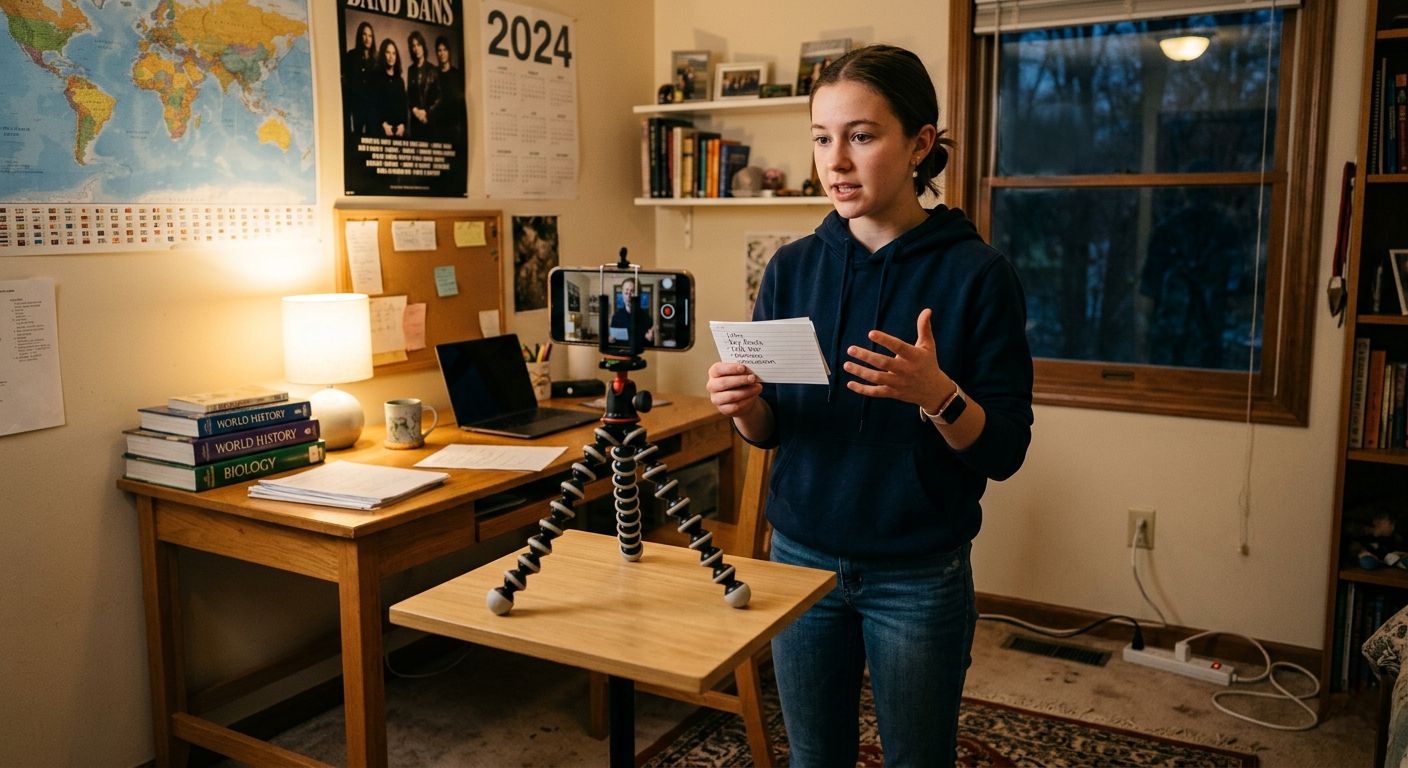
One of the biggest mistakes, especially during student years, is leaving preparation until the last moment. Behind every effective presentation lies a serious rehearsal process. Starting your preparation about a week in advance not only increases your command of the subject but also helps you manage your nervousness. Recording yourself on video during this process is one of the most effective development tools. The first time you watch yourself, your voice or posture may feel strange; however, that feeling of discomfort is exactly where growth begins.
To accelerate your progress, it is very helpful to watch these recordings not only by yourself but also with one or several people you trust. While reviewing them, you should ask yourself these critical questions: Is my speaking pace exhausting the audience? Can my voice reach the person sitting at the back of the room? Do my gestures and facial expressions support what I am saying, or do I appear completely motionless? When you take note of the answers and try again the next day, you will notice that your weaknesses gradually decrease with each repetition and that your confidence slowly returns.

During a speech, the power of body language should never be underestimated. Your hand and arm movements should act as visual tools that emphasize your message; neither overly exaggerated nor overly stiff. Monotony in your tone of voice can quickly cause the audience to lose focus. For this reason, you should keep your speech dynamic by adding small rises and falls in tone as well as strategic emphasis. Personally, one tactic I frequently use to make my presentations more dynamic and capture the audience’s attention is including funny photos of well-known figures such as Celal Şengör or Elon Musk in my slides. This method softens the atmosphere without crossing the boundaries of professionalism and helps both you and your audience enjoy the presentation. (Still, I wouldn’t recommend using this tactic in formal presentations:)
In conclusion, that first wave of nervousness you feel when stepping up to the podium is completely normal—and it actually gives you energy. The important thing is not allowing that excitement to stop you, but transforming it into preparation and discipline. Remember that the speakers you admire most today were once standing at that same podium, trembling with fear but continuing to improve without giving up. With time and practice, that podium will eventually become the place where you feel most comfortable.
Remember: no one is born a perfect speaker. Good speakers are simply people who worked hard and invested effort into improving themselves.
Arda Şahsi
Yücel Cultural Foundation
Volunteer Writer